Need Help?
We are a phone call away!
Cape Town’s Fire and Rescue Department faced an operational challenge: equipping 30 fire stations with a dependable alerting system that could seamlessly integrate with their EPIC Incident Management platform.
Off-the-shelf solutions proved to be expensive, rigid firmware and hardware designs, and minimal local technical support left the department with few viable options. Without a customised solution, response times risked lag, and as a result, service delivery could suffer.

The IntelliCOMM™ Remote Commander has been developed to activate with one command from the Emergency Control Centre/ Call-taking And Dispatch system.
The customisable firmware automatically activates all the relevant alerting elements such as lights, bells, sirens, gates to alert the remote station to an Emergency Callout Situation. All elements in the system goes off in a predetermined sequence thereby reducing any potential failed emergency calls due to any unreliable network connections.
A local manual override provides failsafe activations from the station watch room.
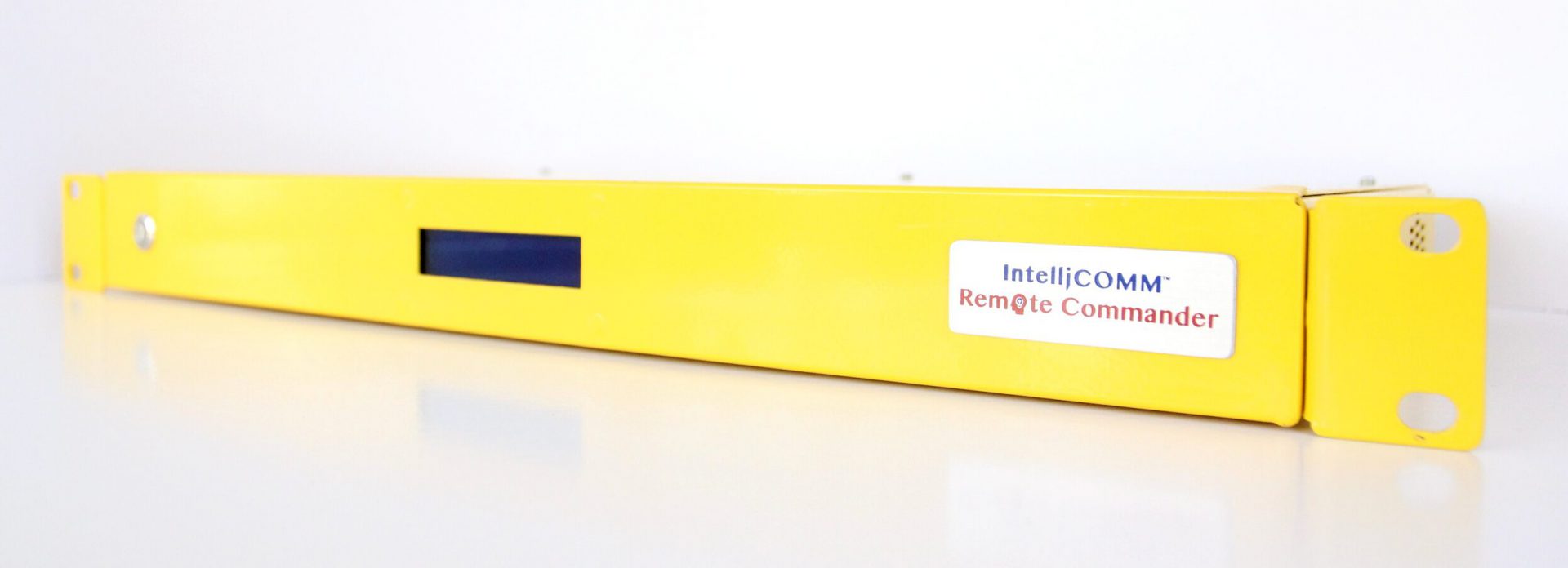
IntelliCOMM™ Remote Commander delivers a stable, software defined, cost effective station alerting / fire station bells endpoint which Fire, Rescue, and Emergency services can depend on 24/7.
4 x remote controllable , optically isolated power outputs (max 220v 2200w/4) at the same voltage as the controllable power input.
Normally Open or Normally Closed relays.
Independent 120/220v system power.
Networking: Gbe Network Interface, 2.4Ghz WiFi.
Remote management via Remote Uptime Monitoring and Management Appliance.
Backlit LCD showing current operation and system status.
Full TCP/IP stack with VPN capability.
Fully customisable software environment.
Easy HTTP API for interfacing with CAD/ eOB/Incident Management software.
5 hours of firmware customisation included per site.
Quality construction for long life span.
Audio PA pass through for sirens/bells and Roger Bleep injection.

Intellicomm working closely with the Fire and Rescue team, designed and built the Remote Commander, a custom alerting device built to specifications. Beyond hardware, Intellicomm developed flexible software APIs that enabled direct, plug-and-play communication with EPIC’s call-taking and dispatch system.
The result: a single HTTP command from EPIC now triggers the Remote Commander to automate station night lights and audible bells, instantly mobilising crews.